
 Interview by: Alperen Akbulut · 14 Aug 2026
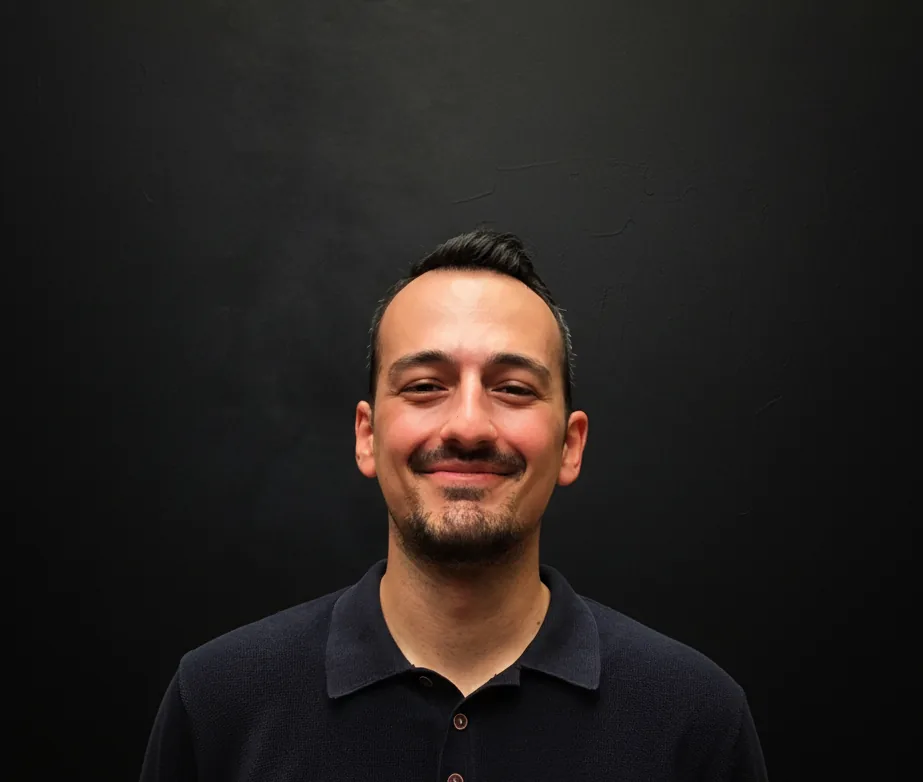
In this third installment of the İşitmeAtölyesi interview series, we host someone who carried his career from Turkey to Belgium. After completing his bachelor’s at Başkent and his master’s at Hacettepe University, Okan Öz today works as a clinical audiologist and researcher at Eargroup — a long-established center in Antwerp — while pursuing his PhD at the University of Antwerp. We talked with him about the path to becoming an audiologist abroad, the differences in clinical practice between the two countries, his advice for young colleagues aiming for a career abroad, and why cochlear implant outcomes vary so widely.
Mr. Öz, could you briefly tell İşitmeAtölyesi readers your own story? After completing your bachelor’s at Başkent University and your master’s at Hacettepe University, you are now continuing your PhD at the University of Antwerp in Belgium and, at the same time, working as a clinical audiologist and researcher at the well-established Eargroup. What was the motivation that carried you from Turkey to Belgium into such an international career, both clinically and academically?
Hello Mr. Akbulut. First of all, thank you very much for the invitation. Before we begin, I’d like to congratulate you. İşitmeAtölyesi — and especially the ODAK project under this platform — is genuinely admirable work. I’m sure ODAK makes the work of many researchers and clinicians considerably easier. So I’d like to extend both my congratulations and my thanks.
As for your question: my adventure abroad actually began with a summer internship at the University of Cambridge at the end of my second undergraduate year. There, for two months, I had the chance to take part in two research projects in Professor Brian Moore’s lab, on intensity coding in cochlear implants and the detection of poor-performing channels. I’d say my interest in research began there.
The following year, at the end of my third year, I did a summer internship at Eargroup, where I now work. It was a center that both provided clinical services and conducted research, with a focus on cochlear implants, and during my internship I realized I wanted to work in exactly such a place. At the end of that pleasant internship, my supervisor told me he might want to work with me after graduation — but that I’d first need to learn Flemish.
So in my final undergraduate year I began learning Flemish. Once the work and residence permit processes were complete, I moved to Belgium in 2020. My biggest motivation in coming here was, beyond working at a strong and respected center professionally, to experience a new country and a new life. The idea of living abroad and exploring genuinely appealed to me a great deal.
Let’s continue with the career-abroad process, one of the focal points of our interview. After working for a time as a clinical audiologist at Başkent University Hospital in Turkey, you integrated into the Belgian system. When you compare the health systems of the two countries and the audiologist’s authority and responsibilities in the clinic (especially in cochlear implant and hearing aid processes), what are the most notable differences?
In my view, the biggest difference between the two countries is the patient load in the clinic and the time allocated per patient. Of course there are very busy clinics here too, but making a general comparison, the time allocated to patients here is considerably more than in Turkey, and the number of patients seen per day is lower. For example, in our clinic we set aside at least 1–1.5 hours for implant patients; in some cases this goes up to 2 hours. In routine practice, the biggest differences are in speech audiometry. Here, speech audiometry is not part of pure-tone audiometry as it is in Turkey, and it is not done routinely for everyone who has a hearing test. Within speech audiometry, the SRT test using spondee words, for instance, is almost never applied; here we only apply the SRS test with monosyllabic words. In the SRS test, not only word scoring but also phoneme scoring is used, and it is applied not only at 40 dB SL as in Turkey but at several fixed intensity levels such as 40, 55, 70, 85 dB SPL, in order to plot an intensity-function curve. The main reason is this: while 40 dB SL only shows the optimal speech-understanding score a patient would reach with amplification, this method gives us information about the patient’s actual, real-life speech-understanding ability and difficulties at that moment.
Apart from these, aside from very specific examples, there aren’t really major differences in audiology between the two countries. Each country has some areas where it does better; but in both, the method, perspective and practice vary between clinics.
The ENT–audiology relationship is also similar in both countries. In university hospitals, where audiology is represented by a larger group, the say and authority are much broader, whereas in small hospitals and some clinics audiologists can generally be seen as technicians. Here some ENT doctors, for example, tend to perform BPPV maneuvers themselves; personally, I hadn’t encountered this much in Turkey.
On hearing aids and implants, of course, we audiologists can express opinions, make recommendations or counter-recommendations. A device or implant candidate first comes to the ENT doctor, who then refers them to us for the relevant assessment. At this stage, if we have a recommendation or counter-recommendation, we report it to the doctor. The doctors in our clinic — and in other places where things are done properly — do take audiologists’ recommendations into account; but the final word, of course, belongs to the ENT physician.
We’d like to get your direct advice for young colleagues and students aiming for a career abroad. A student of audiology who, like you, wants to exist in Europe both as a clinician and a researcher — which competencies (language, research skills, specific clinical tools, etc.) should they emphasize throughout their education? What, in your view, is the critical factor that will “make the difference” in applications abroad?
For friends who want to come abroad, I can say this: there is genuinely a serious shortage of audiologists here. For instance, I know that in some hospitals, because of this shortage, hearing tests are done by nurses. We too posted a job ad two years ago and didn’t receive a single application for a whole year. In fact, students sign contracts at the institutions where they intern and start working as soon as they graduate. So I believe everyone who has developed themselves well and genuinely aims to come here has a chance.
For that, above all, you need to be able to speak English very well; that’s the most important part. If you’re going to a country other than the UK, the US or Canada, you naturally also need to learn that country’s language well. To work in the health sector in Belgium, for example, you must know Flemish at least at B2 level, or French depending on your region. For friends coming for a PhD or post-doc, the situation is a bit different; since English is sufficient almost everywhere in academia, knowing the country’s language isn’t expected of you.
Another very important matter is networking; in fact, I think it’s at least as important as language. Internships abroad, conferences, joint projects... Whatever the route, you absolutely need to build connections. Because many institutions may not want to deal with the work and residence permit processes for someone they don’t know, especially someone coming from outside the European Union. But people you’ve interned with, met at a conference or worked with before can open doors for you far more willingly once they’ve seen your professional background and language skills. That’s why I think Erasmus+ summer internships are an invaluable opportunity for anyone planning a career abroad; I recommend them to everyone.
“Abroad, there’s something at least as important as language: networking.”
Let’s turn a little to your research and PhD topics. The title of your ongoing doctoral thesis at the University of Antwerp is “Understanding outcome variability in cochlear implantation: novel predictors and clinical profiles.” What exactly do the “new clinical profiles” you’re working on — which could explain the wide range of performance we see in cochlear implant outcomes — encompass?
This is actually a question all of us face every day in the clinic: “How much benefit will patient X gain from implantation, or will they benefit at all?” The variables we most often use to predict postoperative outcomes from the preoperative hearing-loss profile are the age at onset of hearing loss, the duration of hearing loss (or, as it’s called in the literature, duration of deafness) and whether the patient has used a device in the past. These are the first questions we ask when an implant candidate comes to us. But they are all very subjective variables; they depend entirely on the accuracy of the information the patient provides. Moreover, each of them carries serious uncertainties and is affected by many different factors.
The most commonly used predictor is duration of deafness; but even this is problematic. First of all, how do we define “deafness”? Do we accept above 90 dB HL? Since we don’t have most patients’ past audiograms, we can’t know this for certain. That’s why some studies have taken the time when the patient could no longer talk on the phone as the starting point. Let’s say we do have old audiograms; the patient was in the 70–80 dB HL band for years, and above 90 dB HL for the last year. Do we count this as one year? Or do we say “duration of hearing loss” and also include the 70–80 dB HL period? And where do we draw the line — do we include moderate losses too? In addition, many extra variables such as the progression of the loss, whether the patient used a device regularly, and whether they benefited from it significantly affect this. For this reason, although duration of deafness is one of the strongest predictors, it can explain only about 10–20% of the variance in postoperative outcomes.
So we thought about how we could improve this. We started from the question: could we assess all these factors with a single measurement, without relying on the retrospective patient history? For that, we investigated the predictive power of the Speech Intelligibility Rating (SIR) index, which all of us actually use every day without realizing it. SIR evaluates articulation skills; but auditory deprivation affects articulation over time as well. So SIR gives a composite answer to many questions — whether the hearing loss is prelingual or postlingual, how long it has continued, whether the patient has used a device. In other words, it becomes an indicator of the functional effect the hearing loss has left on the central nervous system.
The results were as we expected. When SIR entered the model, the most commonly used variables — age at onset of hearing loss, duration of hearing loss and deprivation period — lost their statistical significance. Moreover, while duration of deafness could explain only 15–20% of the variance, SIR alone could explain 31–51%. Our goal now is to reduce the remaining 49–69% of the unknown as much as possible.
Looking at your publications, we see that you deal with quite specific and complex cases. For example, you were part of a study published in the journal B-ENT in 2024 examining the long-term follow-up of cases in which cochlear implantation was performed with hearing preservation after vestibular schwannoma resection. In such rare and surgically challenging cases, what is the audiologist’s critical role in the postoperative process for a successful implant rehabilitation?
In such cases, the most critical stage determining the outcome is surgery. When the tumor is removed, it is not enough for the cochlear nerve to be preserved only anatomically; it also needs to remain functionally intact. If serious damage occurs to the nerve during surgery, then no matter what we do afterward, the benefit the patient gains remains limited. So the foundation of a good postoperative outcome is actually laid with a successful surgery.
One of the audiologist’s most important contributions is the objective assessments made during surgery. The intraoperative eABR we used in our study is one of the most powerful tools we have in this respect. Measurements are taken both before surgery and after the tumor is completely removed. Especially the presence of eABR responses obtained after resection gives us very valuable information about postoperative auditory performance, since it shows that the cochlear nerve continues to function, and it supports the decision for cochlear implantation.
If we’ve been able to preserve nerve function, these patients’ cochlear implant performance is often no different from that of other cochlear implant users. But if damage occurs to the nerve, speech understanding performance may decline depending on its degree; indeed, in advanced cases, benefiting from a cochlear implant may not be possible at all because the electrical stimulation cannot be transmitted.
In such situations, first of all, the patient needs comprehensive counseling with realistic expectations. If partial nerve function has been preserved, we try to obtain the highest benefit from the patient’s current potential through intensive auditory rehabilitation and regular, close follow-up. So although surgery is the decisive step for success in these patients, we reach the best results when correct patient selection, intraoperative assessment, and the subsequent individualized follow-up and rehabilitation are handled together.
“The foundation of a good postoperative outcome is actually laid with a successful surgery.”
You also have a notable study published in the journal Ear and Hearing in 2022, in which you examined “speech audiometry results before and after reimplantation” in cochlear implant users. For patients who have to undergo reimplantation due to device failure or medical reasons, how do their auditory performance and adaptation processes after the second surgery progress compared with the first implant?
In the clinic, since many patients will undergo surgery again, they naturally worry: “Will I be able to hear as well as with the first implant?” Our study showed that this worry is actually unfounded. We found that patients’ speech understanding performance reached higher levels in the long term. The most likely reason is that, thanks to the first implant, the brain already recognizes electrical auditory stimulation; that is, with the second implant the learning process doesn’t start completely from scratch.
That said, we always give patients this information too: after reimplantation, performance doesn’t return to its previous level the next day. In our study, we saw that patients needed an adaptation period of, on average, 3 to 9 months to surpass their pre-reimplantation performance. So being patient in the first months and having regular audiological follow-up is very important.
Of course, not every patient follows the same course. In our series, a performance decline was observed in a very small group; but the reason was mostly medical — for example, fewer active electrodes being used due to complications during the second surgery, or the progression of an underlying disease such as otosclerosis. So when a successful surgery and appropriate electrode placement are ensured, we don’t expect reimplantation to negatively affect auditory performance.
Another important point is that the decision to reimplant is made with the correct indication. When the device is technically faulty, the results of reimplantation are naturally quite clear-cut — and this group makes up the vast majority of cases. But in what we call soft failure cases — where the manufacturer cannot find a technical problem but patient complaints or a decline in performance are observed — one needs to be more cautious. That’s why, at the end of our study, we argued that soft failure cases alone may not always be a sufficient justification for reimplantation.
As an expert who has gained clinical experience in both Turkey and Belgium and who closely knows the health dynamics of both countries, we’d like to wrap up our conversation. How can we blend the strengths of the two systems in audiology? What are the “best practices” you observed in Europe that you would recommend your colleagues in Turkey integrate into their own clinical practice?
I find the audiologist profile in Turkey truly very dynamic. Our colleagues are very open to learning, agile and quite enterprising; they’re not afraid to try new things. Also, because the patient population is very large, they can encounter many different pathologies in a short time and gain serious clinical experience. For example, we very rarely encounter conditions such as congenital malformations, some genetic diseases, syndromes and neuropathy here. In this respect, clinical experience in Turkey covers a broader spectrum.
The approach I would most want to bring from Europe to Turkey would be a performance-focused follow-up mindset, especially for device and implant users. Looking only at the audiogram, patient feedback or the device’s technical measurements is not enough. The intensity-function curve of the patient’s speech understanding performance, spectral discrimination skills and acoustic loudness perception should not be seen merely as outcomes; in fact, they provide very valuable information that we should use when improving the settings.
Another important matter is digitalization. In Turkey, audiograms and test results are still kept on paper in many centers. Especially for patients followed for years — such as hearing aid and cochlear implant users — or patients whose hearing loss fluctuates, keeping all audiological data in a central, digital database provides a huge clinical advantage. Being able to reach a patient’s results from 7–8 years ago with a single click both makes decision-making easier and makes it possible to assess the change in the patient much more accurately.
Finally, perhaps my most important recommendation would be this: patients are not our test subjects. In Turkey, one can sometimes see the approach of “since the patient is here, let’s do this test too, and add that one as well.” Yet every test done should have a clear clinical purpose. If that assessment won’t change your diagnosis, won’t affect your treatment plan, or won’t provide a direct benefit to the patient, unnecessary tests should be avoided. The real goal is not to do as many tests as possible, but to do the truly necessary test for the right patient at the right time.
Thank you again for the invitation; it was a very enjoyable conversation for me. I hope it has been useful for the readers as well.
“Patients are not our test subjects; every test done should have a clear clinical purpose.”
In this third İşitmeAtölyesi interview, we talked with Okan Öz about the realities of being an audiologist abroad, the clinical culture of two countries, and how cochlear implant research translates into practice. The takeaway is clear: good language skills, a solid network, and a performance-focused, data-driven clinical mindset make the difference both abroad and in Turkey. See you in our future interviews.
 İşitmeAtölyesi