 İşitmeAtölyesi
The World Congress of Otorhinolaryngology returned to Istanbul after a gap of 33 years. For five days 52 rooms ran in parallel, the programme held more than two thousand sessions, and the official figures list roughly 2,000 speakers from 112 countries.1 The attendance figure given to us during the congress was above 7,000.
A programme on that scale cannot be followed from end to end. With speakers in fifty rooms at the same hour, everyone's congress is different from everyone else's. What follows are notes from the sessions I attended and from the headlines that stood out on the hearing science side. It does not claim to be a comprehensive summary.
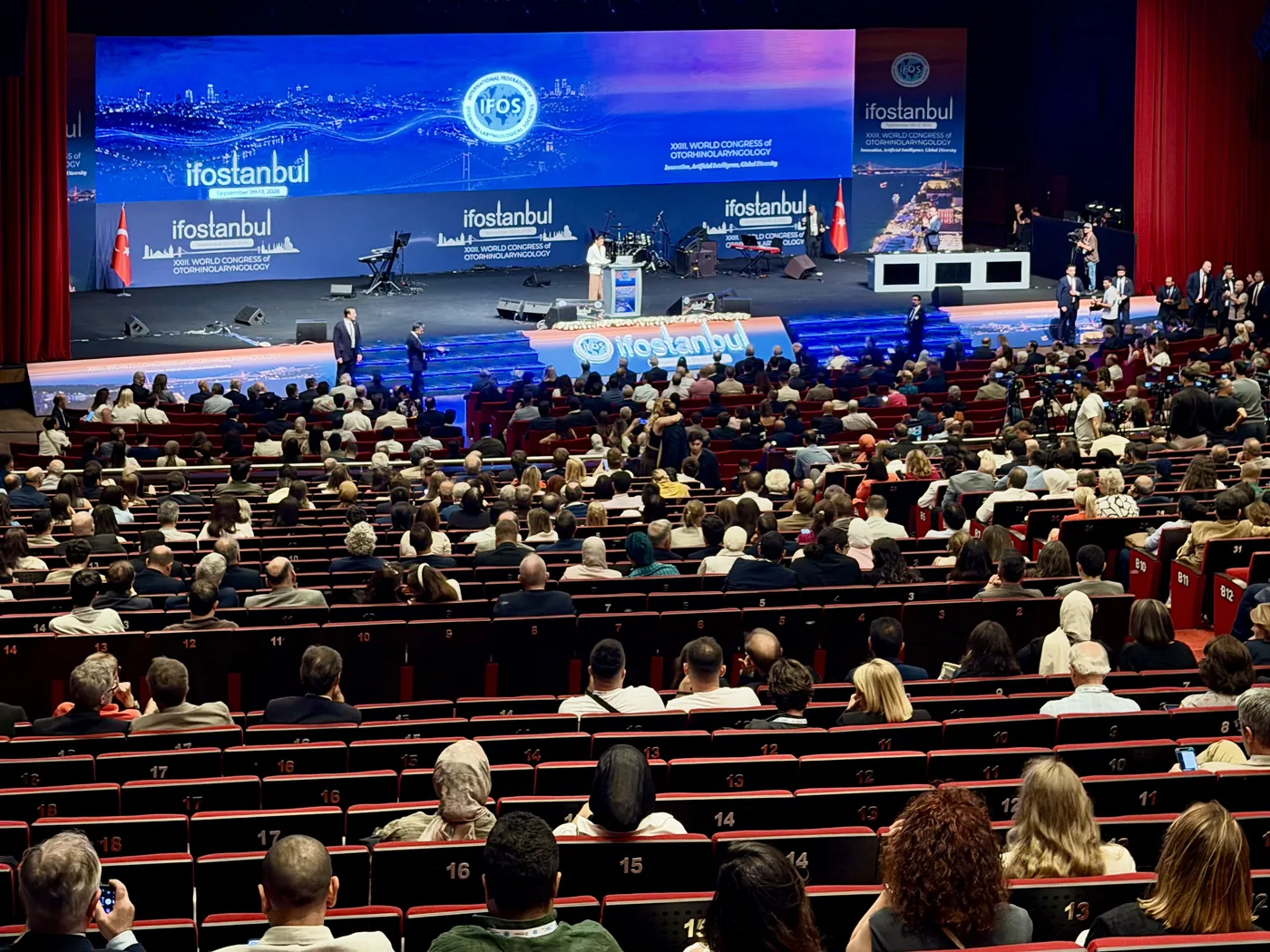
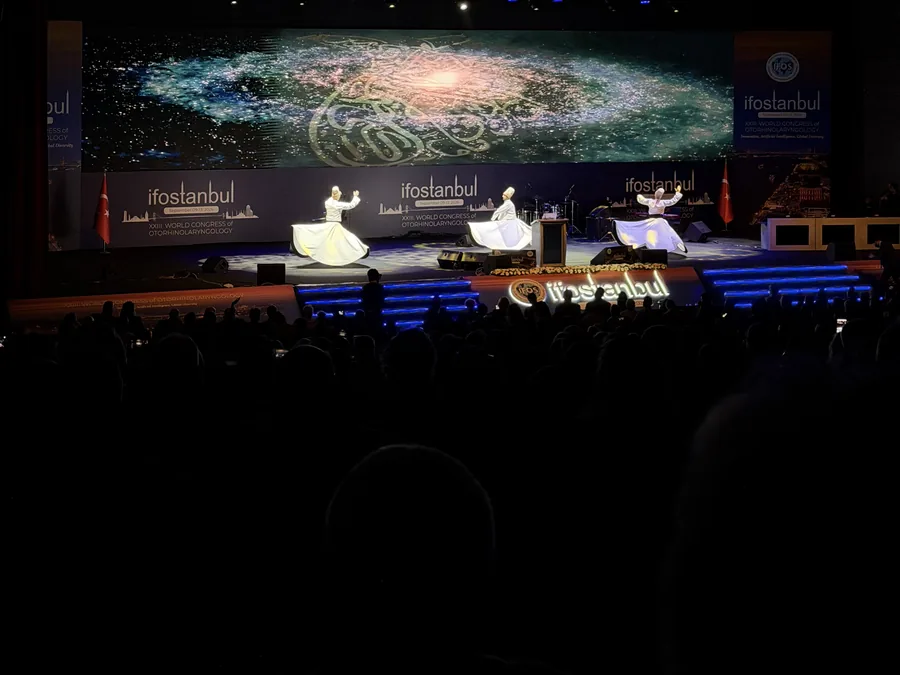
One thing is worth saying at the outset: hearing was not a side heading at this congress. A third of the sessions in the programme sat under otology, vestibular science, cochlear implants, audiology and hearing aids; taken together it was the single largest block. That had a spatial counterpart too. The 3,500 seat Harbiye Auditorium, the main hall of the congress, was assigned to "Otology 1" for the whole programme. The opening ceremony was held in the same hall: speeches by the congress president Prof. Özgür Yiğit and by Numan Kurtulmuş, Speaker of the Turkish Grand National Assembly, alongside a whirling dervish performance and a concert.
| Field | Sessions |
|---|---|
| Otology and neurotology | 296 |
| Vestibular science | 129 |
| Cochlear implants and implantable devices | 127 |
| Audiology | 86 |
| Hearing aids | 58 |
| Total | 696 |
Fifty-two rooms running at once also meant the audience was split. Some sessions filled the room right up to the door, others ran with a smaller group.
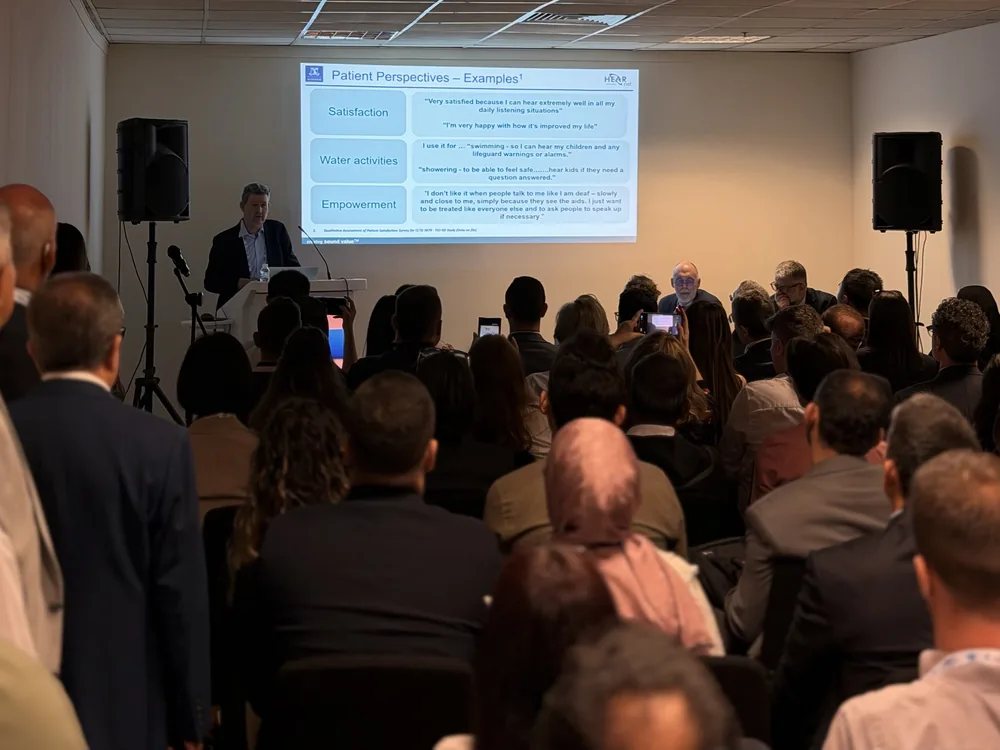
There were a few moments when I had to choose between two sessions in the same time slot. In a programme with fifty-two rooms nobody gets to say "I saw all of it"; depending on which room you walked into, your congress ends up being a different one from everybody else's.
Direct intervention in the inner ear is now a section of the programme
Scientifically this was the most striking line of the congress. Yilai Shu presented gene therapy with AAV-hOTOF in autosomal recessive hearing loss. The panel chaired by Tobias Moser was devoted to optogenetic hearing restoration. In the Advances in Inner Ear Therapeutics symposium organised by the American Academy of Otolaryngology, Konstantina Stankovic, Michael Hoa, Wade Chien and Alan Cheng discussed where inner ear therapeutics currently stand. Mustafa Tekin's genetic panels and sessions on hair cell regeneration, stem cells and inner ear drug delivery completed the line.
None of this work has entered routine clinical practice yet. But a field that a few years ago was represented by a single session now opens a section of its own in the programme, which says something about where the field is looking.
AI moves from promise to protocol
The official theme of the congress was "Innovation, Artificial Intelligence, Global Diversity, and Education-Training", and artificial intelligence appeared in seventy-six sessions. On the hearing side the heading is no longer a general story about the future; it has become a concrete discussion about protocol.
One of the clearest examples was Paola Incerti's NAL-NL3 presentation. The new prescription/fitting formula runs a global optimisation over a large database of audiograms. Gains are changed, speech intelligibility is evaluated, loudness is checked against a "normal" limit, and the loop repeats. The broad set of targets that emerges then passes through clinical expert review.
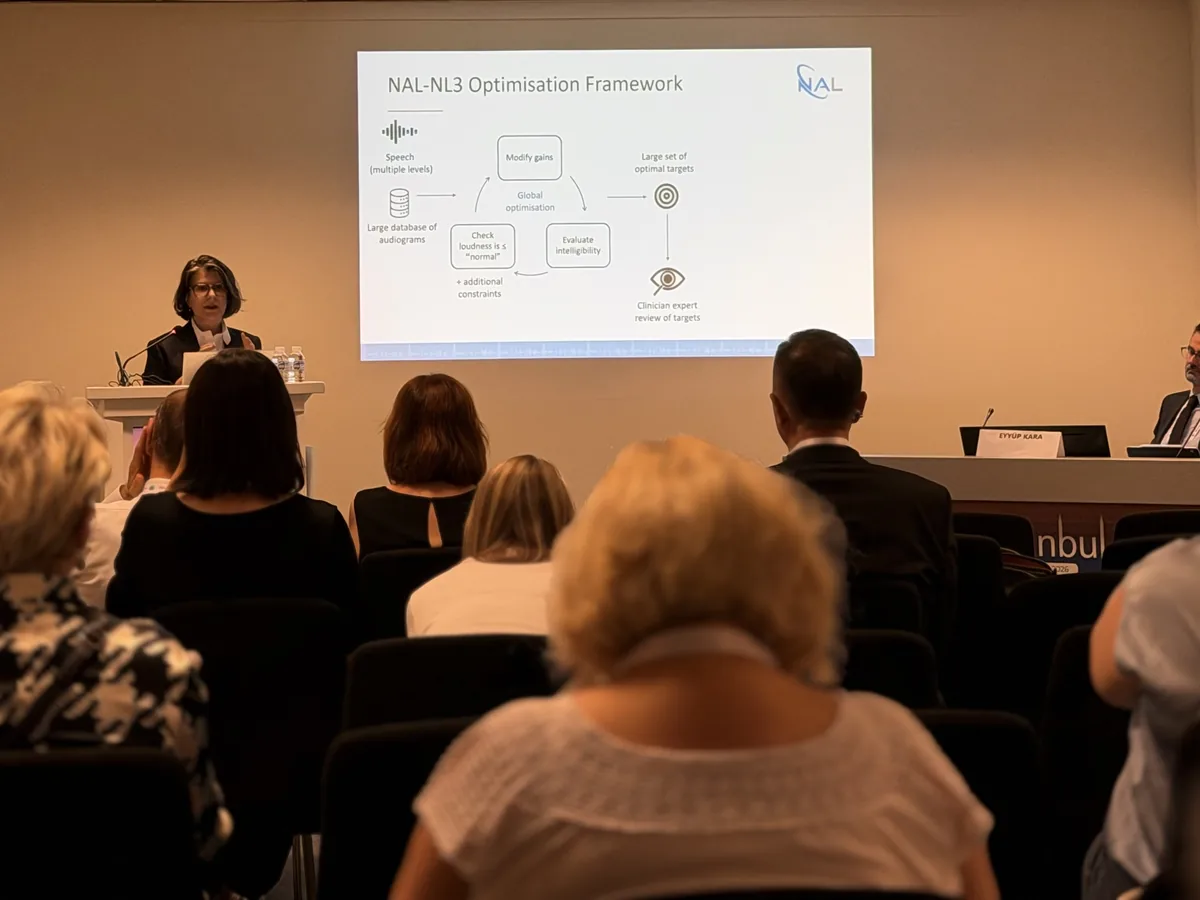
The optimisation is automatic, the approval is not. Bringing AI into hearing aid prescription and fitting does not remove the clinician at the end of the decision chain; it gives them a better starting point.
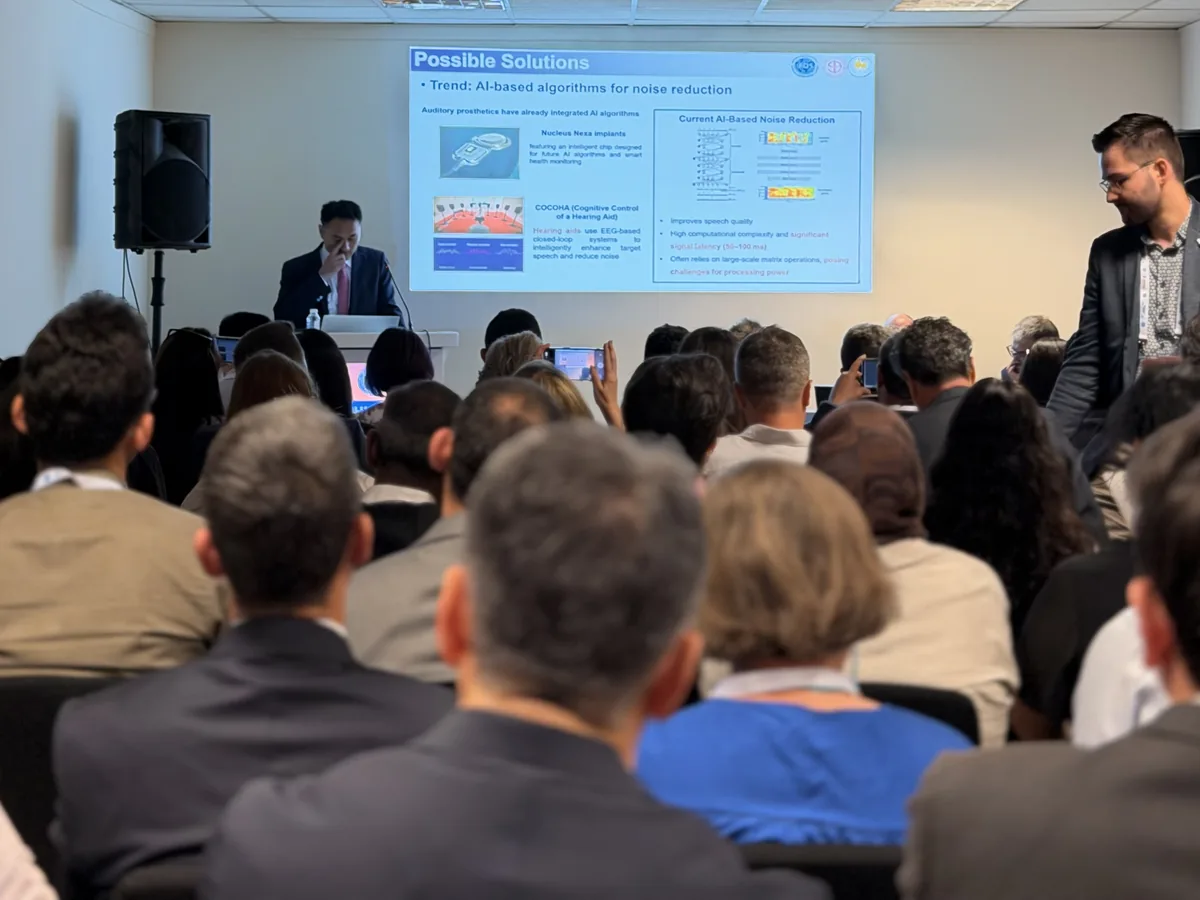
Achin Bhowmik, Chief Technology Officer at Starkey and adjunct professor at Stanford University School of Medicine, described the work of turning hearing aids into multifunctional health devices through sensors and artificial intelligence; the weight of the talk was on neural networks embedded in the device itself and how they are run on that hardware. Another session I attended reviewed where AI-based noise reduction algorithms currently stand. Hearing aids and implants have already started to carry these algorithms; new implant systems with smart chips and EEG-based closed-loop hearing aid work are examples. Against that, processing power and a 50-100 millisecond signal delay remain serious constraints. Auracast, Hung Thai-Van's big data lecture, robot-assisted cochlear implant electrode insertion and automated speech-in-noise testing sat on the same axis.
Hearing loss no longer stops at the ear
Nicholas Reed's presentation was one of the parts of the congress that made me think the most. In the Lancet Commission's table of modifiable dementia risk factors, hearing loss sits at the top of the list with an eight per cent share, ahead of education, smoking, depression and social isolation.2
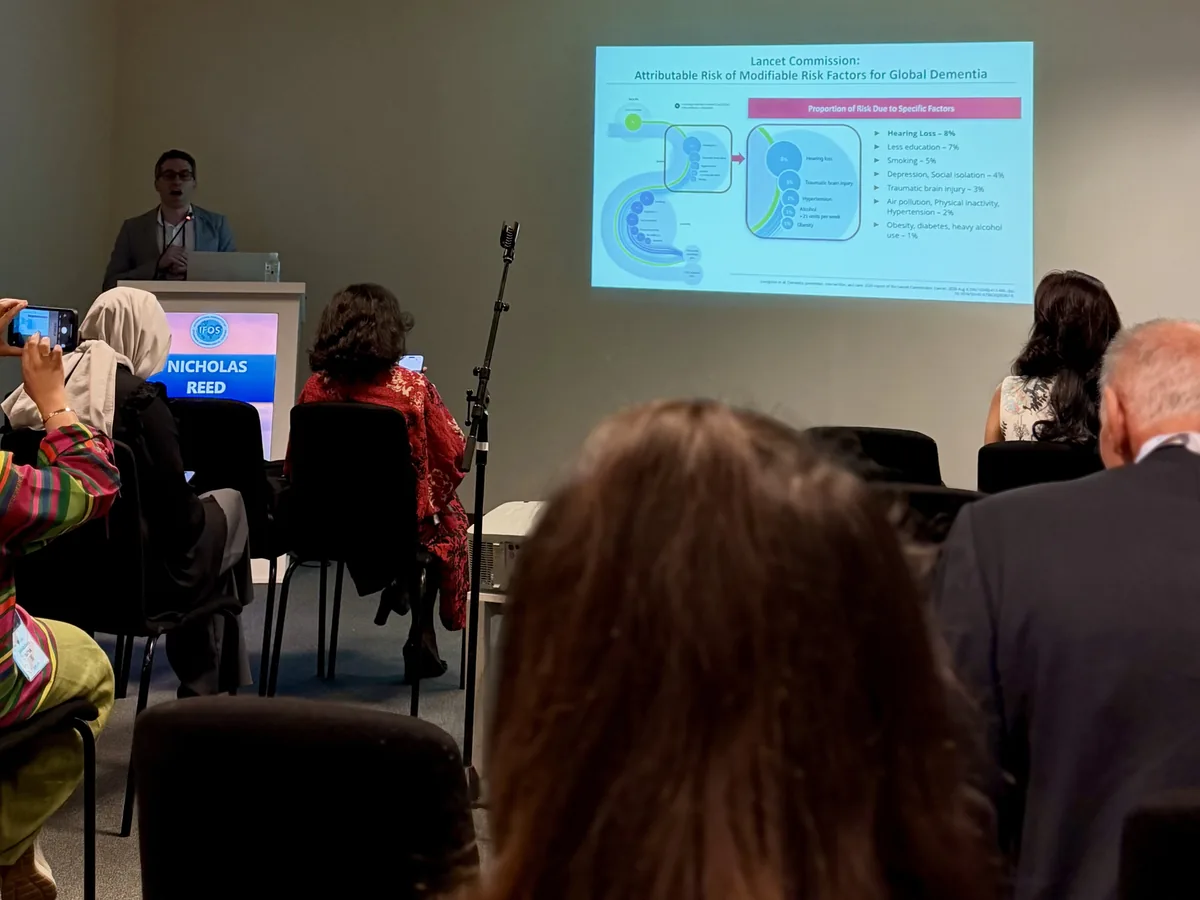
That table was the common ground of many sessions. Isabelle Mosnier presented the relationship between cochlear implantation and cognitive health in older adults. The Hearing Care and Healthy Aging round table and Stefan Launer's presentation of the ECHHO programme approached the same question from different directions. Another session asked something more basic: what stands in the way of referring older patients to hearing care? The discussion was not only at the level of "does hearing loss affect cognition" but at the level of "if it does, how do we build the referral system".
I touched on the question of outcomes the audiogram does not capture in a panel on the long-term experience of implant users. My talk was about what happens to music after cochlear implantation. In short: implant users describe music as the most important sound after understanding speech, yet our routine follow-up battery contains neither a music perception test nor a music-specific patient-reported outcome measure (a questionnaire or scale).
We have approached that gap from three directions in our own work. In adult implant users we measured music perception together with music-related quality of life;3 we then examined how perceived sound quality relates to music perception, music engagement and quality of life.4 In children we took the question one step further back and compared implicit auditory sensory memory with short-term memory for musical and verbal stimuli.5 Measured sound quality and reported music experience did not predict one another; the two behaved like separate outcomes.
A 92 per cent sentence recognition score in quiet tells you nothing about whether that patient still listens to music, or about their music perception abilities.
Access was on the table
The World Health Organization's Make Listening Safe initiative appeared in two separate sessions, and the role of ENT physicians in the WHO ICOPE programme was discussed.6 De Wet Swanepoel spoke on moving hearing aid service delivery outside the clinic.
The most concrete part of this heading was the regional programmes. The establishment of cochlear implant programmes in the Balkans and Central Asia, the first outcomes of the implant programme in Albania and implantation within humanitarian aid were each presented separately. A presentation from East Java described how newborn hearing screening had been integrated into primary care.
What was said on the exhibition floor resembled what was said in the halls
The exhibition area felt like a programme of its own. Every cochlear implant and hearing aid manufacturer was there: Cochlear, MED-EL, Sonova, Demant and Starkey, alongside measurement system makers such as Interacoustics, Path Medical and Neurosoft. On the surgical side, Medtronic, Karl Storz, Olympus and Zeiss stands were visible from the entrance of the congress centre onwards.
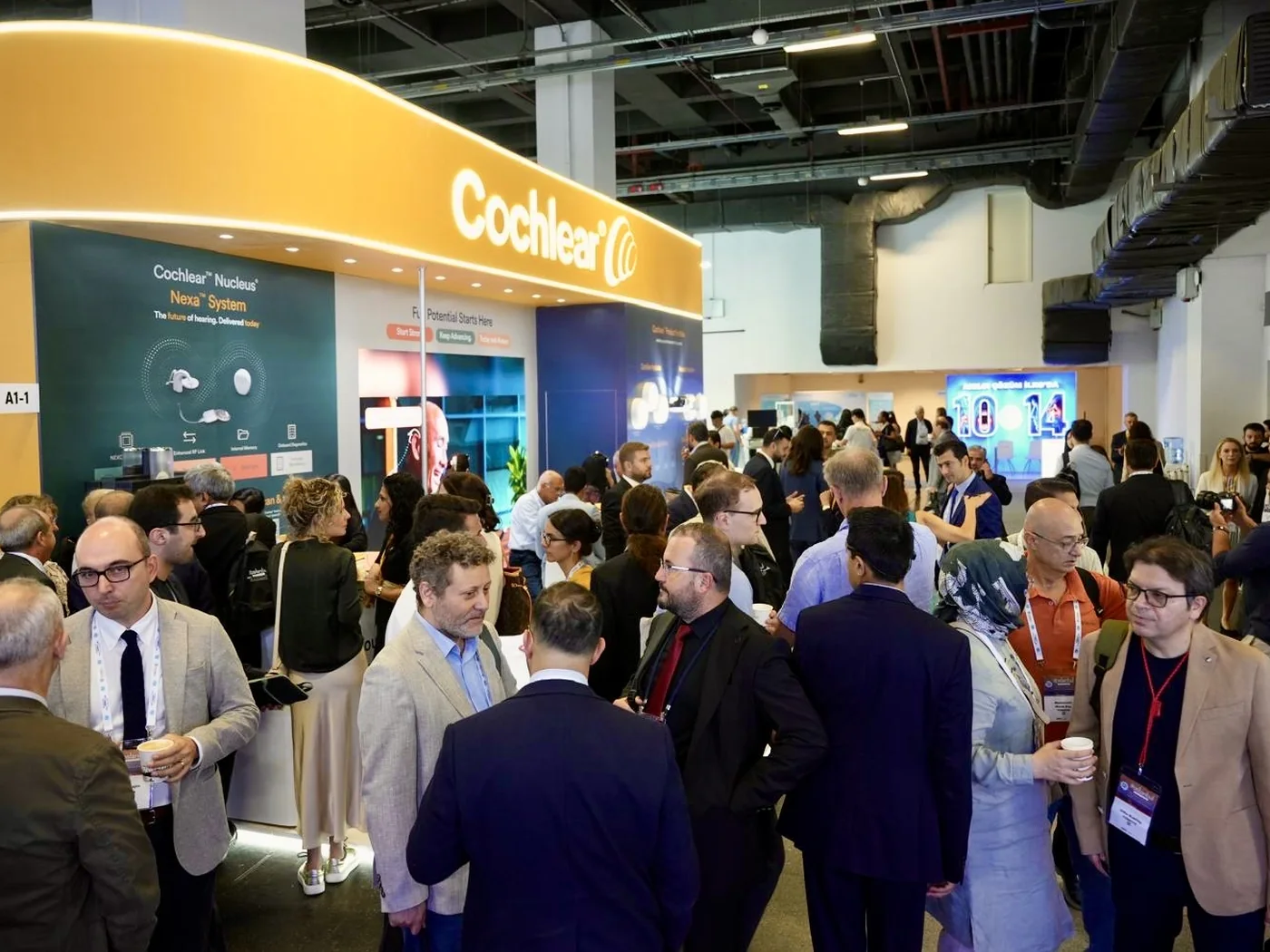
What made the exhibition floor interesting was how closely it overlapped with the discussion in the halls. The new implant system advertised on the Cochlear banner at the entrance turned up a few hours later on a lecture slide as an example of a smart chip designed for AI algorithms.
The exhibition floor also had a function that appears in no programme. The coffee queues rivalled some of the halls for size, and while you waited you heard who had moved where, what was happening in which department, who had started which project. This was where people from different continents who had known each other for years only through email finally looked at one another and said "so this is you", then discovered that five years of catching up does not fit into one coffee break.
The programme also included a Start-Up Arena: companies selected by the Scientific Committee presented in five minutes each, with a product demo required. First place went to a company working on optogenetics, second place to MindAffect, which works on hearing assessment with rapid cortical responses.
Objective measurement: an old question, new tools
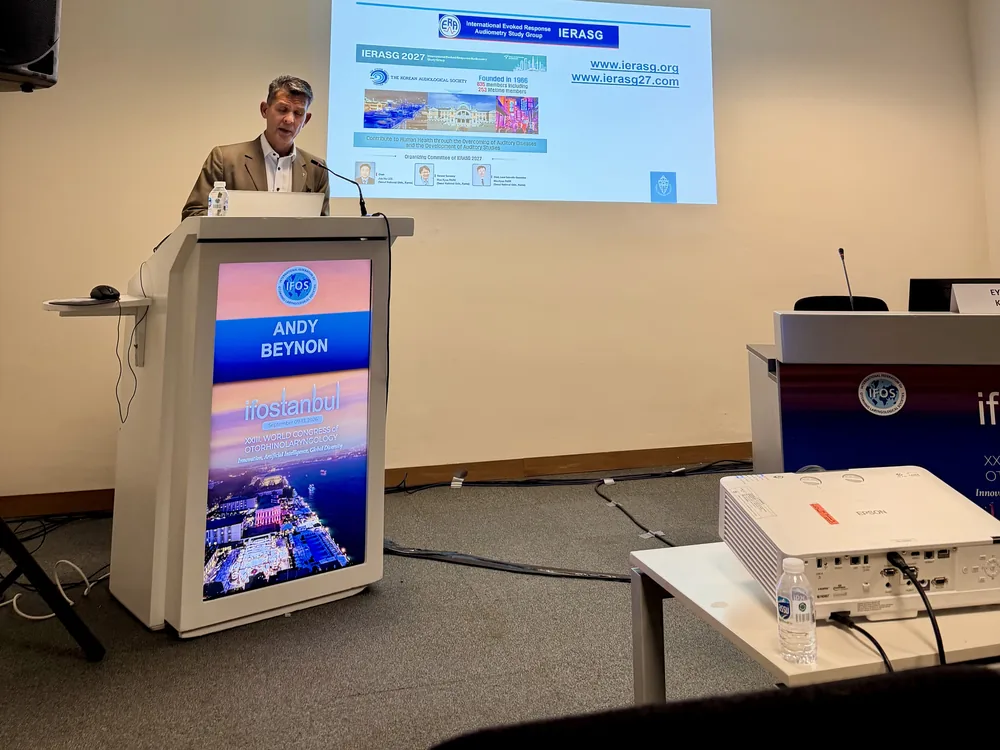
On the first day there was a round table on cortical auditory evoked potentials and neural plasticity across hearing devices, with Andy Beynon among the speakers. On later days, in the same hall, stimuli developed for aided cortical response measurement, implant candidacy assessment with transtympanic eABR and the use of electrically evoked late responses in implant programming were each presented in separate sessions.
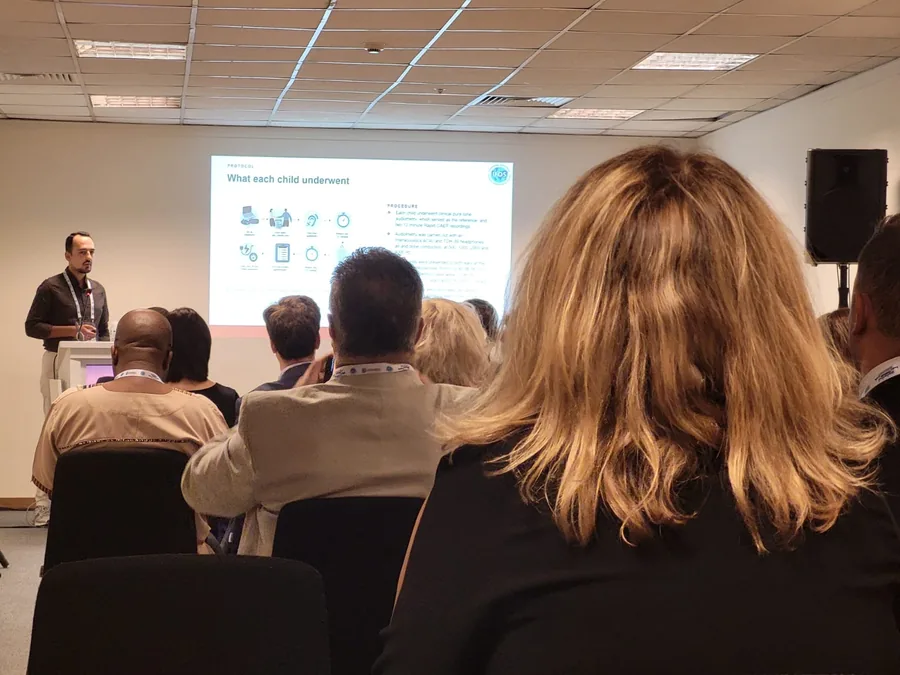
My own contribution sat under this heading. In work carried out with Marmara University and MindAffect, I presented the first application in children of the rapid cortical auditory evoked potential (rapid CAEP) method.7 In twenty-six children, thresholds estimated from 12-minute EEG recordings taken while the child watched a silent video correlated with pure tone audiometry at ρ = 0.66. The mean absolute difference stayed at 11.6 dB, and in recordings repeated on the same day the waveform of the cortical response replicated almost exactly at r = 0.94. Threshold repeatability was moderate, and 2 kHz stood out as the point requiring optimisation.
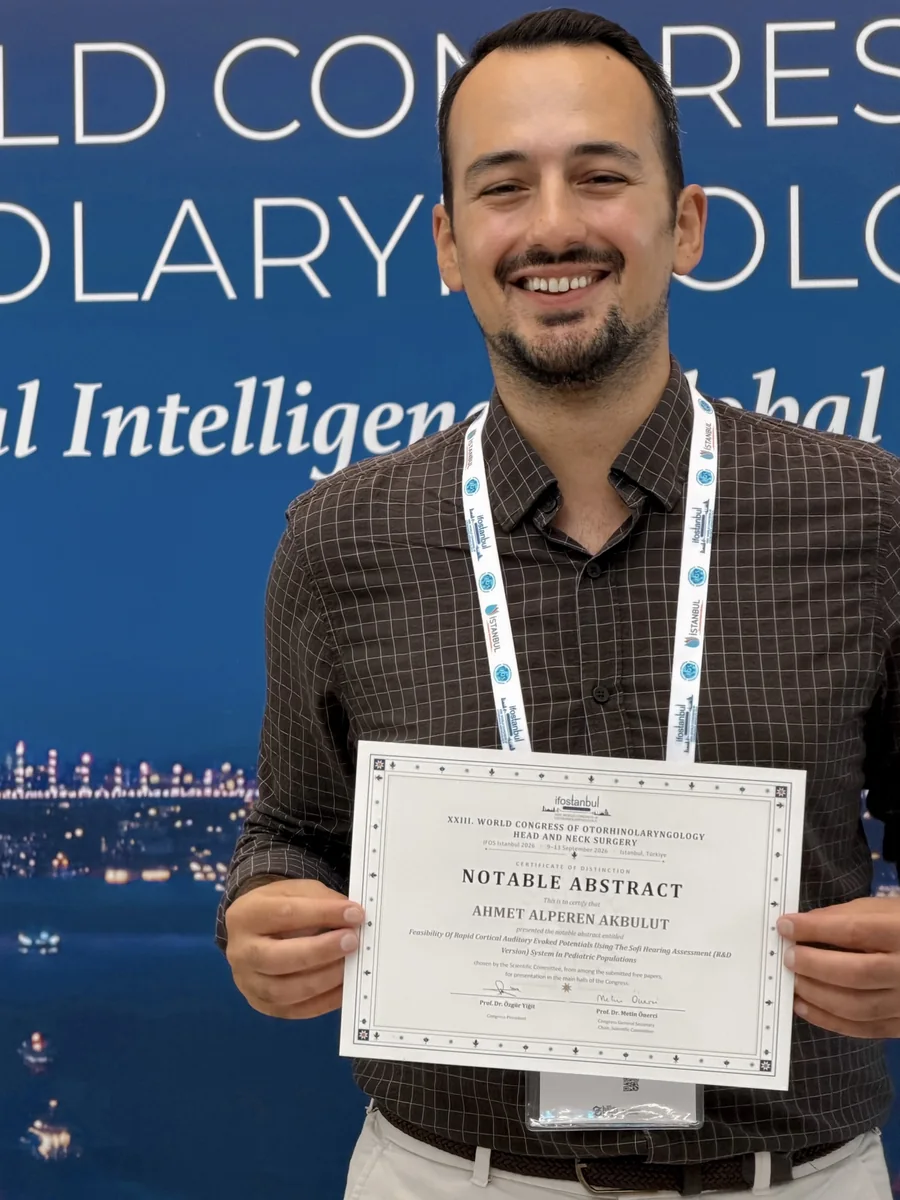
The abstract was selected by the Scientific Committee into the "Notable Abstract" category among the free papers submitted. The selected studies were presented in separate sessions in the main halls of their own fields, and a certificate signed by the congress presidency was handed over after each presentation. The questions that followed were about where the method would help in the clinic: children who cannot be tested and cases unsuitable for sedation were raised most often, and whether it could be used in hearing aid fitting also came up.
- Optogenetic hearing restoration: stimulating the auditory nerve with light rather than electricity. The aim is to remove current spread in the cochlear implant and obtain a far narrower area of excitation.
- Auracast: the broadcast standard that arrives with Bluetooth LE Audio. Audio can be sent from a single source to an unlimited number of receivers; hearing aids and implants can be receivers directly.
- Rapid-CAEP: a cortical response method that estimates frequency-specific hearing thresholds from short EEG recordings the patient listens to passively.
Hong Kong is next
The IFOS General Assembly selected Hong Kong as the host of the 2030 World Congress. After a vote in which Yokohama, Barcelona, London and Copenhagen were also candidates, the congress returns to Asia four years from now.
First time in Istanbul
Back after 33 years
The next host
Frames from the congress
A few frames left over from five days. Tap a photo to enlarge it.
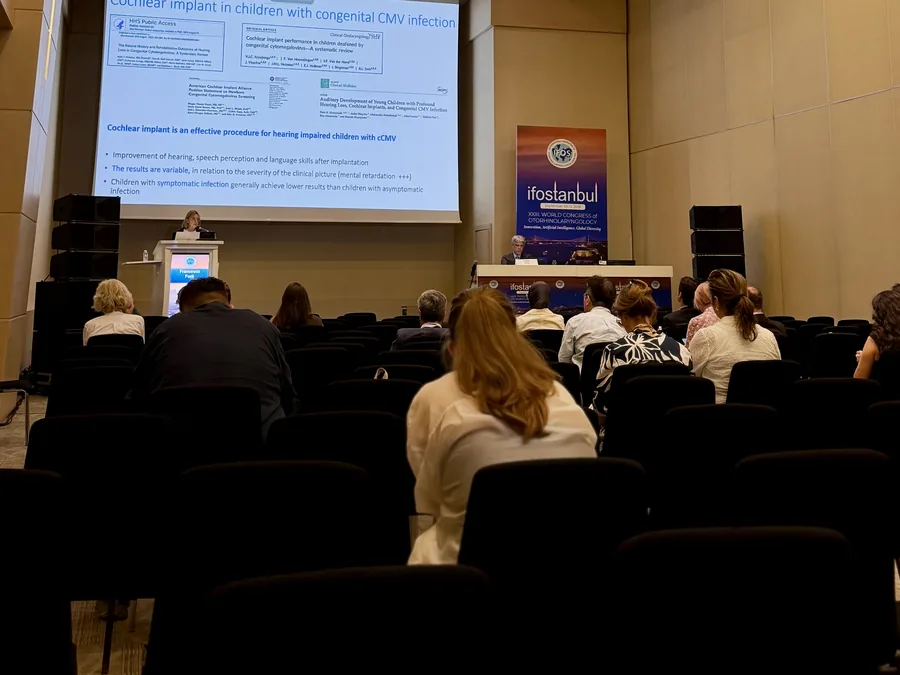
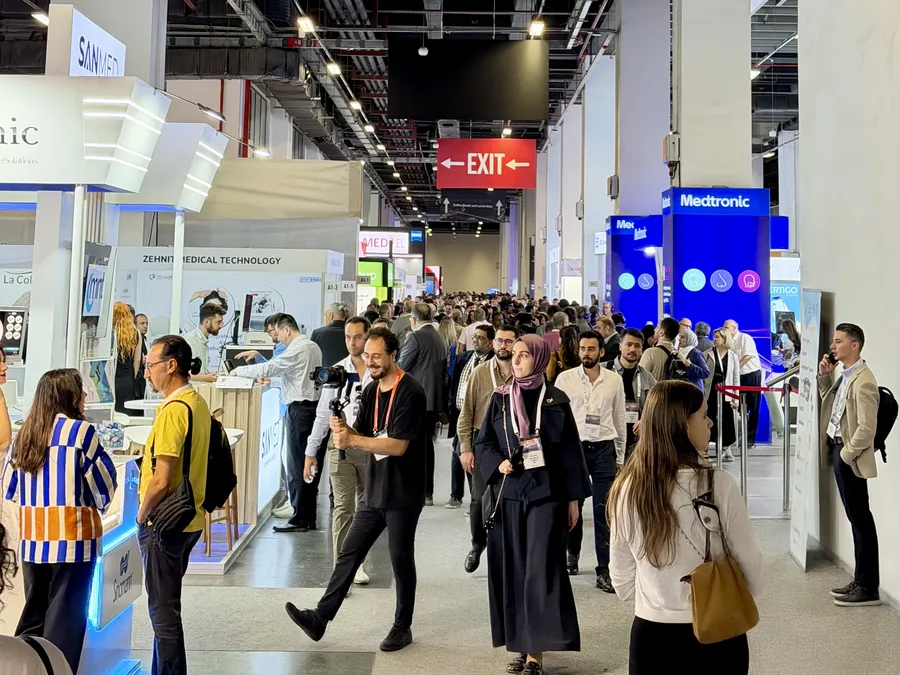
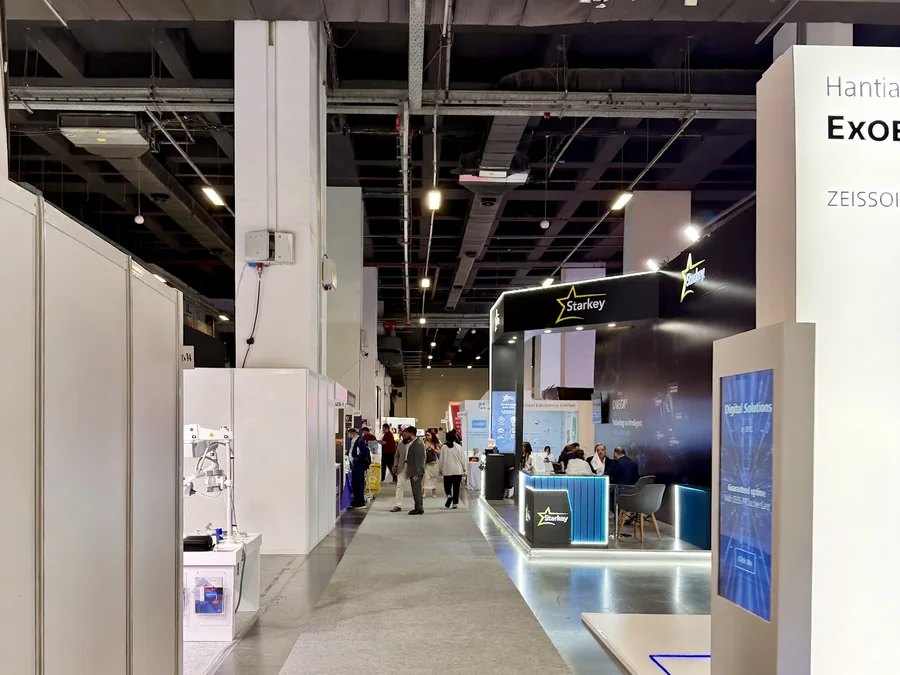
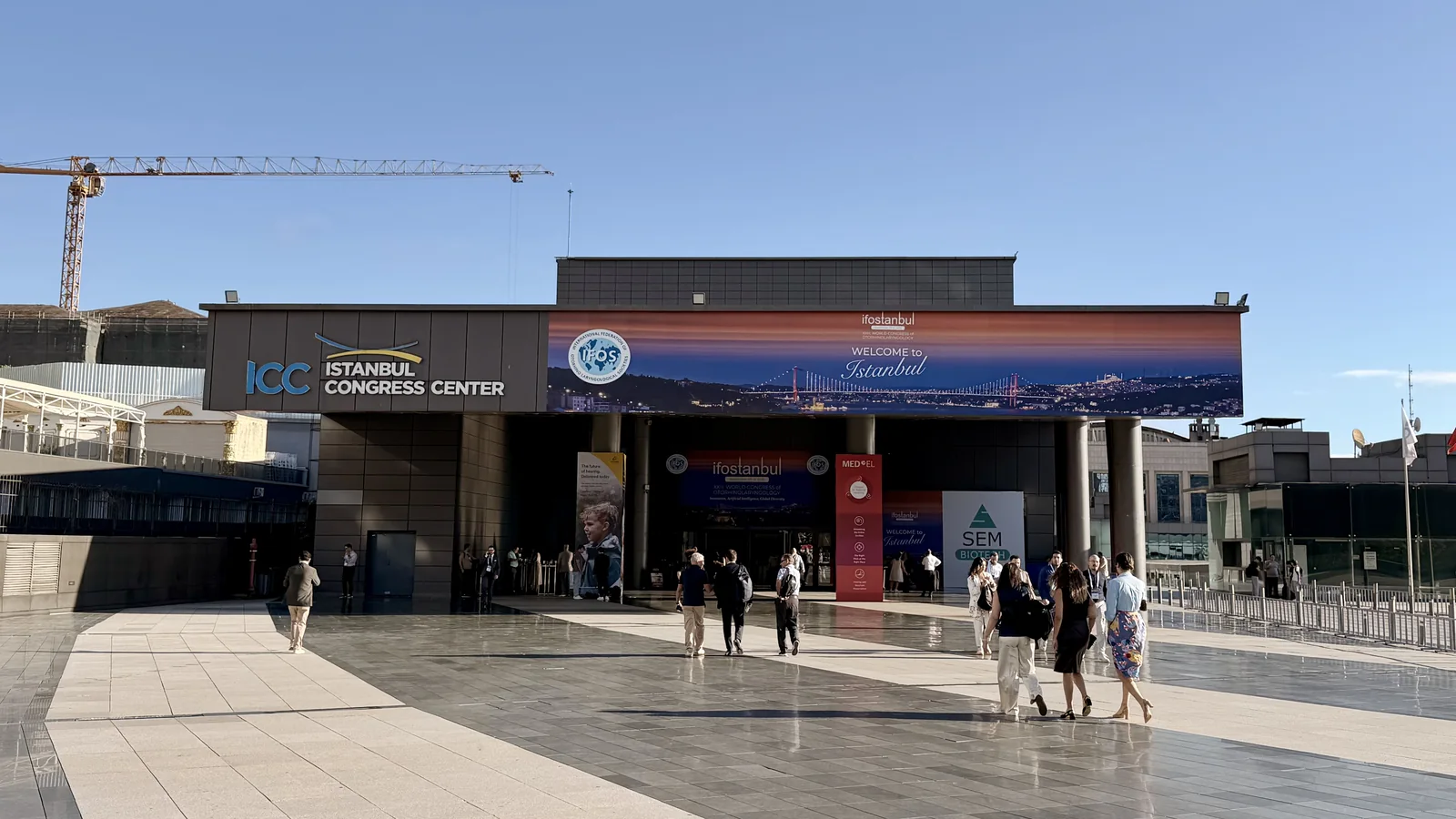
Source & Citation
Akbulut, A. A. (2026). Notes From IFOS 2026: Hearing Science at the World ENT Congress. İşitme Atölyesi. https://www.isitmeatolyesi.com/en/post/ifos-2026-kongre-notlari/
Alperen Akbulut
After completing his undergraduate degree in Audiology at Istanbul University, he earned a master’s degree in the Audiology and Speech Disorders program at Marmara University, where he is continuing his doctoral studies. From 2019 to 2021 he worked as a clinical specialist at Advanced Bionics; since 2021 he has been a lecturer in the Department of Audiology at the University of Health Sciences, Hamidiye Faculty of Health Sciences. His research focuses on music perception, music-related quality of life and the music–memory relationship in cochlear implant users; his work has appeared in journals such as Ear and Hearing and European Archives of Oto-Rhino-Laryngology. He is the founder of İşitme Atölyesi, which aims to communicate audiology in an evidence-based and accessible way.
References
- IFOS Istanbul 2026. Faculty List Information and Program Information. XXIII World Congress of Otorhinolaryngology Head and Neck Surgery, 9-13 September 2026, Istanbul. ifosistanbul2026.org
- Livingston, G., Huntley, J., Sommerlad, A., et al. (2020). Dementia prevention, intervention, and care: 2020 report of the Lancet Commission. The Lancet, 396(10248), 413-446.
- Akbulut, A. A., Karaman Demirel, A., & Çiprut, A. (2025). Music perception and music-related quality of life in adult cochlear implant users: Exploring the need for music rehabilitation. Ear and Hearing, 46(1), 265-276. doi:10.1097/AUD.0000000000001580
- Karaman Demirel, A., Akbulut, A. A., Çiprut, A., & Bal, N. (2025). Exploring the link between sound quality perception, music perception, music engagement, and quality of life in cochlear implant recipients. Audiology Research, 15(4), 94. doi:10.3390/audiolres15040094
- Akbulut, A. A., Çiprut, A., & Bal, N. (2026). Implicit auditory sensory memory and short-term memory for musical and verbal stimuli in children with cochlear implants. Hearing Research, 480, 109750. doi:10.1016/j.heares.2026.109750
- World Health Organization. Make Listening Safe initiative and the ICOPE programme.
- Guyonnet-Hencke, T., Portoles, O., et al. (2025). Rapid estimation of frequency-specific hearing thresholds from cortical auditory evoked potentials. International Journal of Audiology, 64, 1182-1192.