VisualEyes™, one of the most widely used video nystagmography (VNG) systems in vestibular system assessment, brings innovations to clinical testing with its new version.
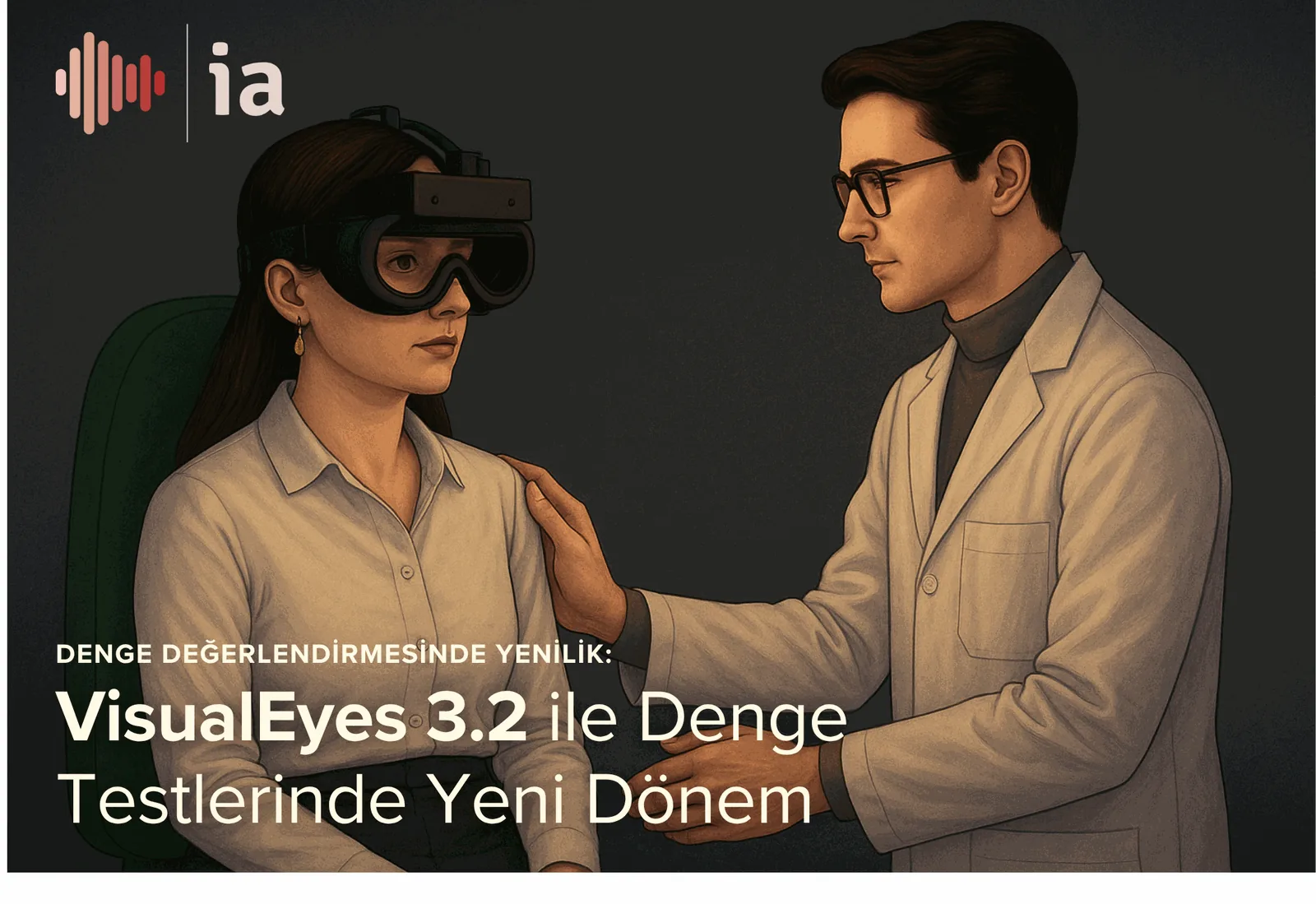
VisualEyes™, one of the most widely used video nystagmography (VNG) systems in vestibular assessment, has been made more comprehensive and functional with version 3.2 developed by Interacoustics. The new version aims to address the assessment of dizziness and balance disorders in clinical practice with a more accurate and holistic approach.
This newly developed test combines the principles of the Video Head Impulse Test (vHIT) and the Gaze Stabilization Test (GST), allowing assessment of an individual's ability to maintain visual fixation during head movement. This approach considers not only the biophysical measurement of the vestibulo-ocular reflex (VOR), but also how a person experiences visual stability in moving environments in daily life.
These tests analyze the effects of cervical spine and neck movements on eye movements, contributing to more accurate identification of conditions such as cervicogenic vertigo. This makes it easier to distinguish dizziness complaints related to the neck's musculoskeletal system from central or peripheral vestibular disorders.
This test assesses saccadic eye movements performed voluntarily by the individual. Shedding light on the higher-order control processes of the oculomotor system, this assessment provides valuable information related to attention, reaction time and frontal cortical activity, particularly in the analysis of central vestibular pathologies.
The additional features that come with VisualEyes™ 3.2 are not limited to clinical tests:
"Thanks to the new features, we can better understand the source and degree of the disorder. This helps us make more accurate recommendations for patients and create effective rehabilitation plans." — Dr. Elizabeth Fuemmeler, Clinical Product Manager, Interacoustics
The VisualEyes™ 3.2 update can be regarded not merely as a technological improvement, but as a development that strengthens clinical decision-making, enhances the patient experience and deepens data analysis. These innovations will play an important role, particularly in distinguishing symptoms originating from the otolith and cervical systems.
 İşitmeAtölyesi