
The mechanisms underlying the link between age-related hearing loss and Alzheimer's risk are being investigated.

Years of studies had revealed a link between age-related hearing loss and Alzheimer's risk; however, the underlying mechanisms are still being investigated. Among the possibilities are that reduced socialization due to hearing loss, and the load on auditory regions affecting other brain regions, weaken cognitive performance.
Researchers from Wuhan University in China have uncovered the molecular mechanism behind this link. In a study published in the journal Nature Aging, it was discovered that a protein called GDF1 plays a critical role in the progression of Alzheimer's.
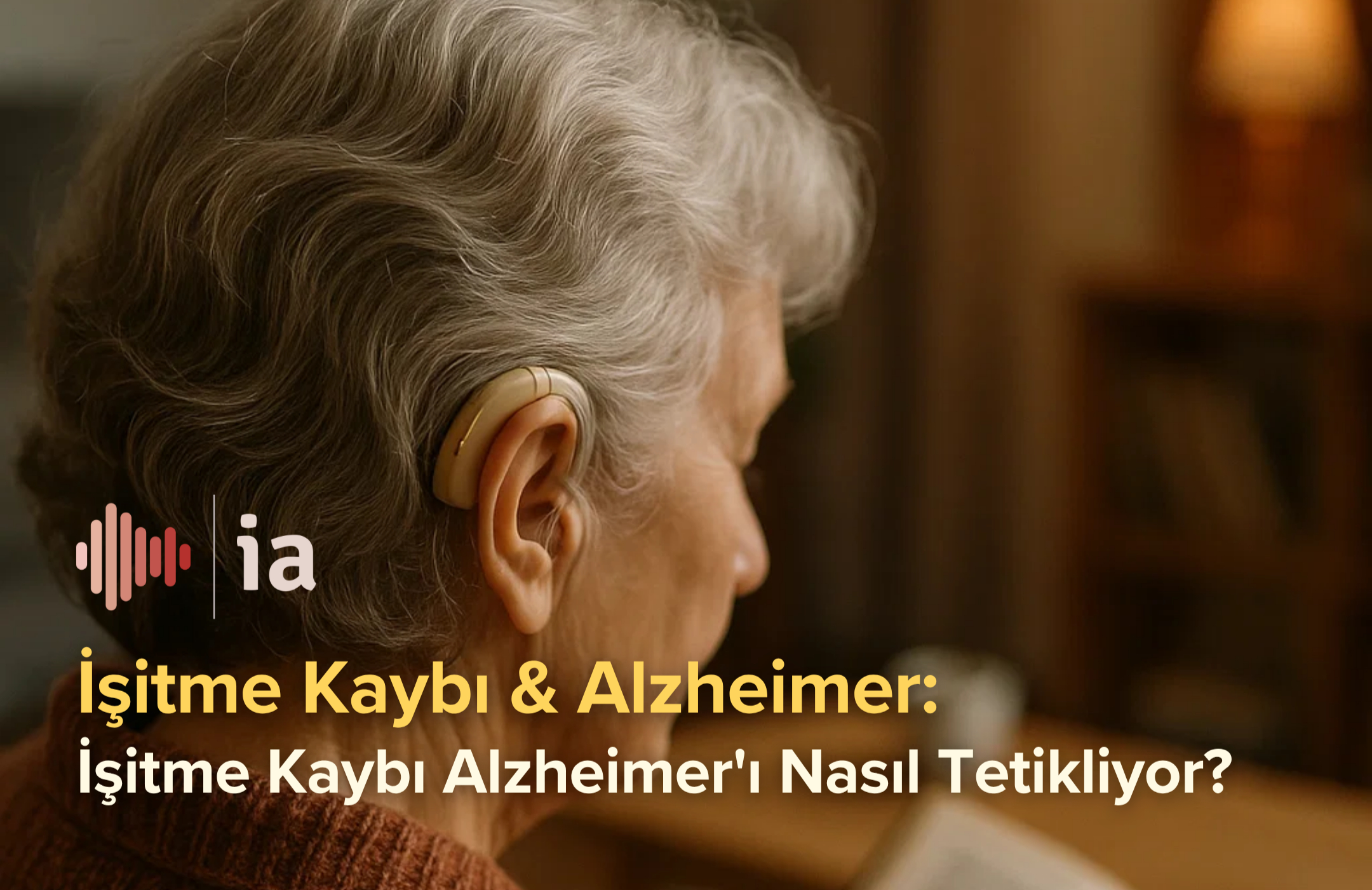
Genetically modified mice were used to model Alzheimer's. In mice with induced hearing loss, amyloid-β plaques were found to accumulate in the hippocampus, auditory cortex and temporal association cortex; the mice performed worse in behavioral experiments and hippocampal synaptic density decreased. When the effects of hearing loss were examined, a marked decrease was detected in the expression of the gdf1 gene. When the mice were given GDF1 supplementation, cognitive impairments, amyloid-β plaque burden and synaptic dysfunction decreased.
Hong-Bo Zhao, an ENT specialist from Yale University, emphasizes that hearing loss does not directly cause Alzheimer's, but that there is strong evidence it may aggravate the disease's progression. The relationship is not one-directional either: in 2020, the same laboratory had shown that changes in hearing can be seen in the early stages of Alzheimer's. According to Zhao, hearing aid or cochlear implant solutions of proven effectiveness may help prevent cognitive decline.
Pan, L., Li, C., Meng, L. et al. (2024). GDF1 ameliorates cognitive impairment induced by hearing loss. Nature Aging, 4(4), 568–583.
 İşitmeAtölyesi