
Vitamin B12 deficiency is associated with hearing loss through cochlear nerve myelination and vascular-metabolic impairment.

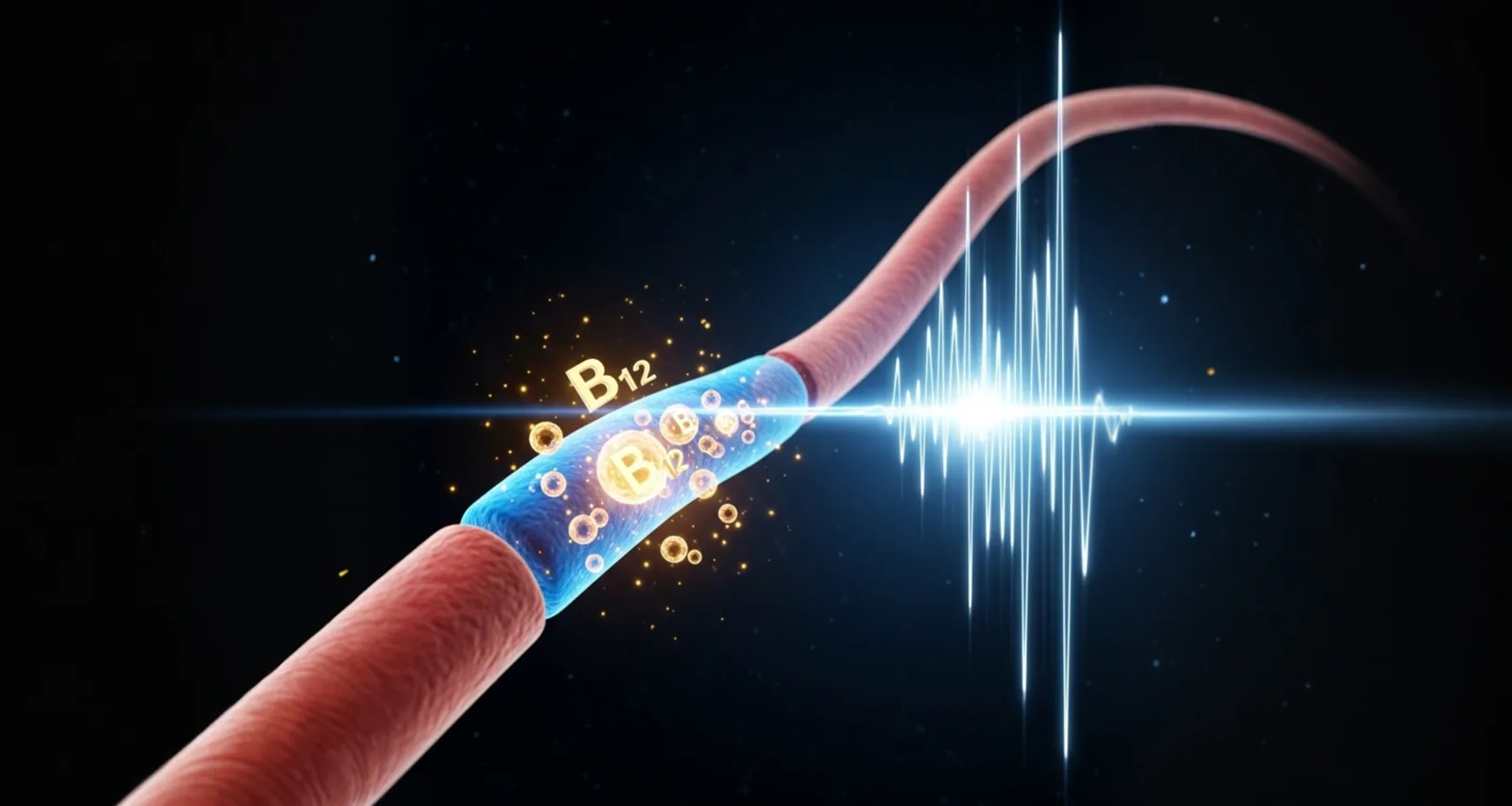
Vitamin B12 (cobalamin) is a critical nutrient for metabolic functions, DNA synthesis and the hematopoietic system. It is also necessary for myelin sheath synthesis (myelination) in the central nervous system. Deficiency is usually defined as a serum B12 level falling below 148 pmol/L (200 pg/mL).
B12 deficiency is associated with hearing loss through myelination disorders in the cochlear nerve neurons, and metabolic impairment in neural conduction and vascular structures. A systematic review revealed that the prevalence of hearing impairment is significantly higher in individuals with low serum B12. In some studies, threshold elevations were seen at low frequencies (250–500 Hz), and in others at high frequencies above 4 kHz. A decrease in DPOAE responses points to functional impairment at the cochlear level.

B12 deficiency in childhood can adversely affect the development of the auditory system; mild hearing loss in school-age children has been reported more frequently in those with B12 deficiency. This underscores the importance of early diagnosis and intervention.
Age-related hearing loss is common in older adults, and B12 deficiency is considered an accelerating factor in this process. Low serum folate and B12 levels are significantly associated with increased thresholds at high frequencies. For this reason, an optimal B12 level stands out as a modifiable risk factor.
Mean serum B12 levels are significantly lower in individuals with noise-induced hearing loss; the prevalence of low B12 is also higher in those with tinnitus. Although some studies report that B12 supplementation alleviates tinnitus symptoms, these improvements have mostly not reached statistical significance — that is, the therapeutic effect is not yet clear.
Longitudinal, controlled studies are needed to determine the relationship between B12 levels and hearing health and the effect of supplementation.
Rodrigues, J., Anand, S., Gunjawate, D., Kumar, K., & Ravi, R. (2025). Exploring the intricate connection between vitamin B12 deficiency and hearing loss: A systematic literature review. Ear Nose Throat J.
 İşitmeAtölyesi