
Age is one of the key factors affecting the auditory system; in particular, the ability to understand speech in noise changes with aging.
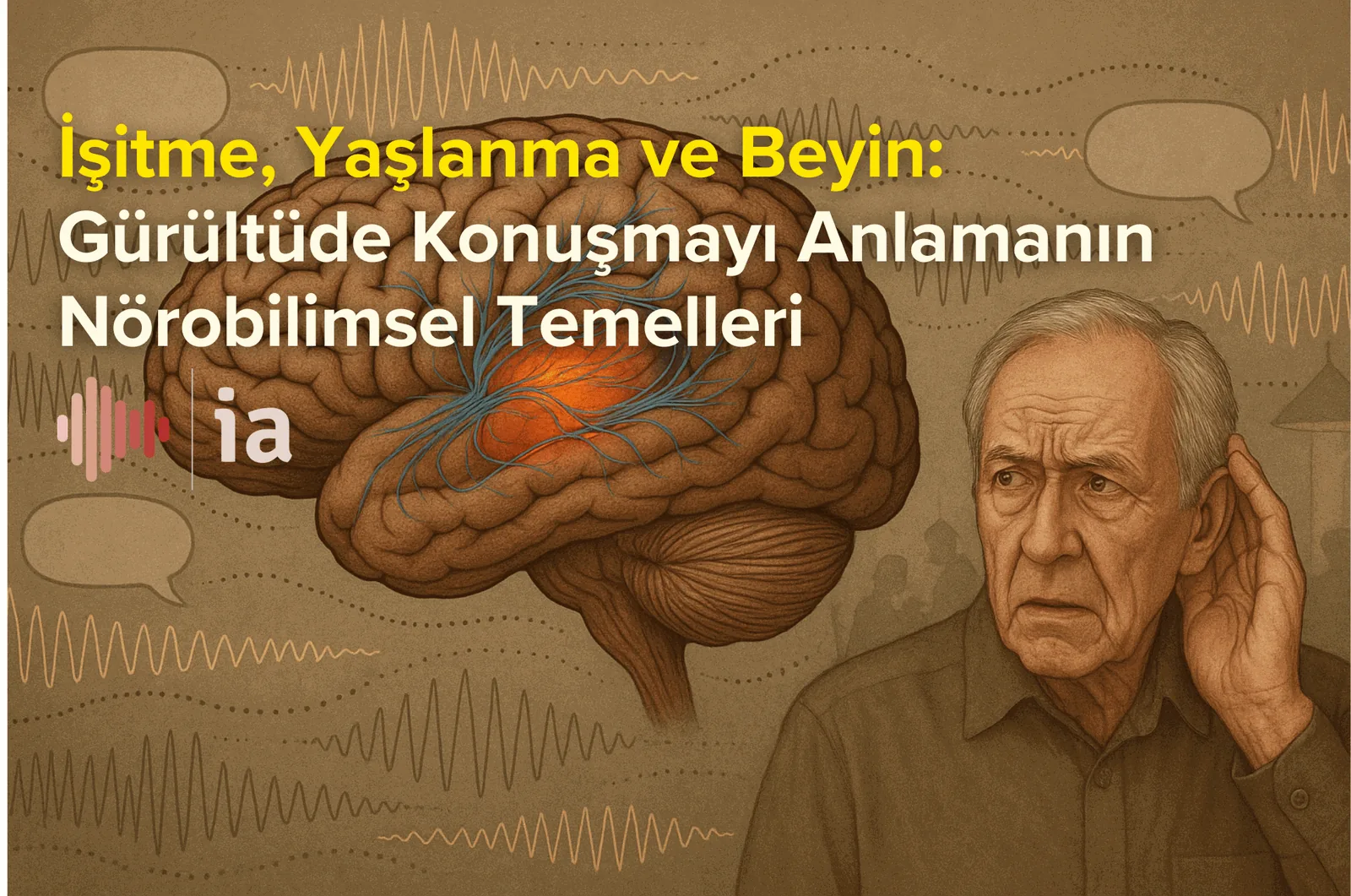
Age is one of the important factors affecting the auditory system, and the ability to understand speech in noise deteriorates markedly with aging and age-related hearing loss. It is known that the process of processing spoken language is affected by cognitive, social and emotional changes.
A new study conducted by researchers at the University at Buffalo shows that difficulties in perceiving speech may be linked to complex communication networks between different regions of the brain. In resting-state MRI imaging, the fact that the left insula works harder even when sound processing is not active points to a lasting reorganization. Because changes in the insula are also associated with the early signs of dementia, these findings may help explain the known link between hearing loss and cognitive decline.
In the study, published in the journal Brain and Language, the researchers correlated the speech-in-noise understanding performance (QuickSIN) of participants aged 22–79 with resting-state functional MRI (RS-fMRI) and diffusion tensor imaging (DTI) data. The fractional anisotropy (FA) measured with DTI indicates white-matter integrity; high FA indicates intact fibers, low FA indicates structural deterioration.
Increased activation in the insula: In those who struggled to understand speech in noise, insula connectivity was stronger even at rest. The hearing loss–dementia link: The reorganization in the insula may explain the relationship between hearing loss and cognitive decline.
"In individuals with hearing loss, the brain does more processing by engaging other areas in order to figure out what is happening. What is interesting is that we observe the insula working harder even when the brain is at rest." — Dr. David S. Wack
Wack, D. S., Schweser, F., Wack, A. S. et al. (2025). Speech in noise listening correlates identified in resting state and DTI MRI images. Brain and Language, 260, 105503.
 İşitmeAtölyesi