
The feasibility of an AI-supported clinical decision support system capable of detecting nystagmus remotely, in real time and at low cost is examined.

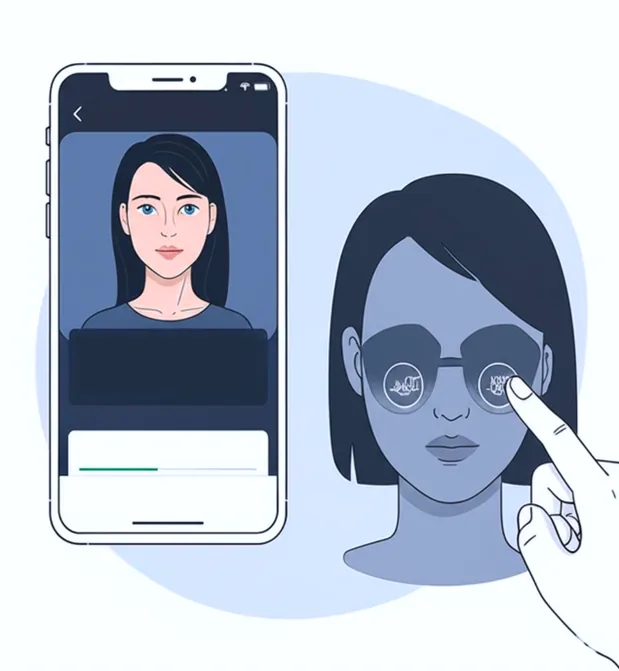
Nystagmus is an important clinical sign in the assessment of vestibular system disorders. The study by Harshal Sanghvi and colleagues demonstrated the feasibility of an AI-supported clinical decision support system that can detect nystagmus remotely, in real time and at low cost. The system evaluates eye movements by analyzing video data recorded with mobile devices and guides clinical decision-making processes.
The widely used Electronystagmography (ENG) and Videonystagmography (VNG) methods face certain limitations. ENG is sensitive to artifacts and can be inadequate in detecting torsional eye movements; VNG, meanwhile, is difficult to use widely due to high cost, the need for large equipment and patient discomfort. AI-based solutions aim to overcome these limitations and offer more accessible, cost-effective and rapid diagnosis.
The Python-based system analyzes smartphone videos with cloud-based deep learning algorithms. Using 468 facial landmarks with the MediaPipe Face Mesh and OpenCV libraries, it tracks eye movements and measures slow-phase velocity (SPV). The model showed successful performance with 98% accuracy, 0.00459 MSE and a ±4.8% correction error rate. The results are evaluated by a clinician, contributing to diagnosis and counseling processes.
The system has the potential to make diagnosis easier for patients in remote regions where immediate access to a neuro-ophthalmologist or audiologist is not possible. The researchers are targeting clinical trials in larger patient groups and FDA approval. Limitations include the small and homogeneous sample, the effect of environmental factors on video quality, and the dataset not being shared for privacy reasons.
Sanghvi, H., Danesh, A. A., Moxam, J. et al. (2025). Artificial Intelligence-Driven Telehealth Framework for Detecting Nystagmus. Cureus, 17(5), e84036.
 İşitmeAtölyesi