Samsung has announced that its self-fitting, over-the-counter (OTC) “Hearing Aid” feature for the Galaxy Buds3 Pro and Buds4 Pro has received clearance from the U.S. Food and Drug Administration (FDA).

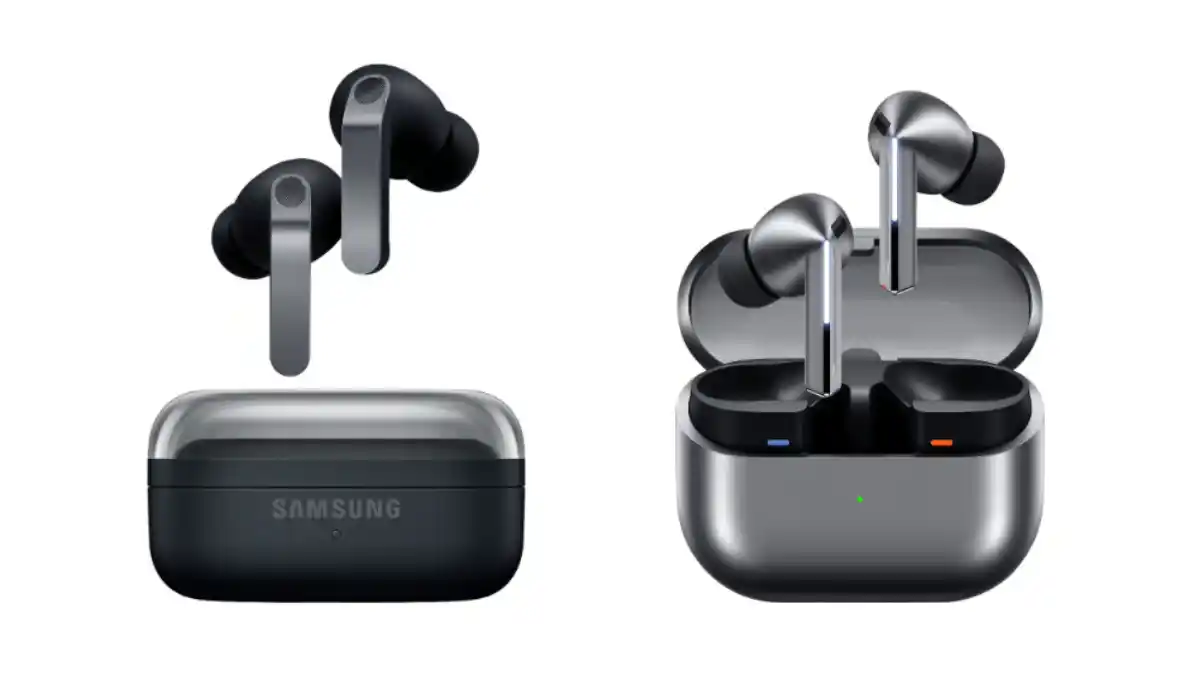
Samsung has announced that the “Hearing Aid” feature it developed for its Galaxy Buds3 Pro and Galaxy Buds4 Pro wireless earbuds has been cleared by the U.S. Food and Drug Administration (FDA). The feature lets adults aged 18 and older with perceived mild-to-moderate hearing loss fit their earbuds themselves (self-fitting) and use them like a hearing aid — without a prescription or a clinic visit.
The feature has two components: a hearing test that assesses the user’s hearing, and a hearing aid mode that amplifies sound in a personalized way based on that test. Samsung says the feature will roll out in the fourth quarter of 2026 — first in the U.S. and other markets where it has been cleared — on a compatible Galaxy device running One UI 8 or later.
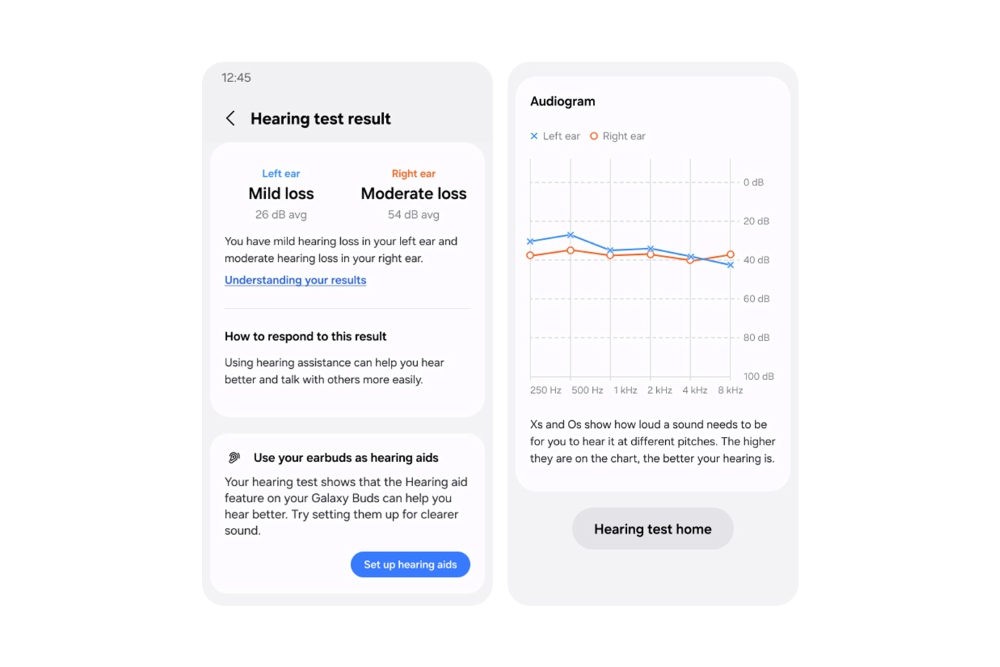
The first step is a hearing test taken through the earbuds in about five minutes. Based on pure-tone audiometry, the test assesses each ear separately and produces a result categorized as normal, or mild, moderate, severe or profound hearing loss. Samsung notes that the test is registered as Software as a Medical Device (SaMD).
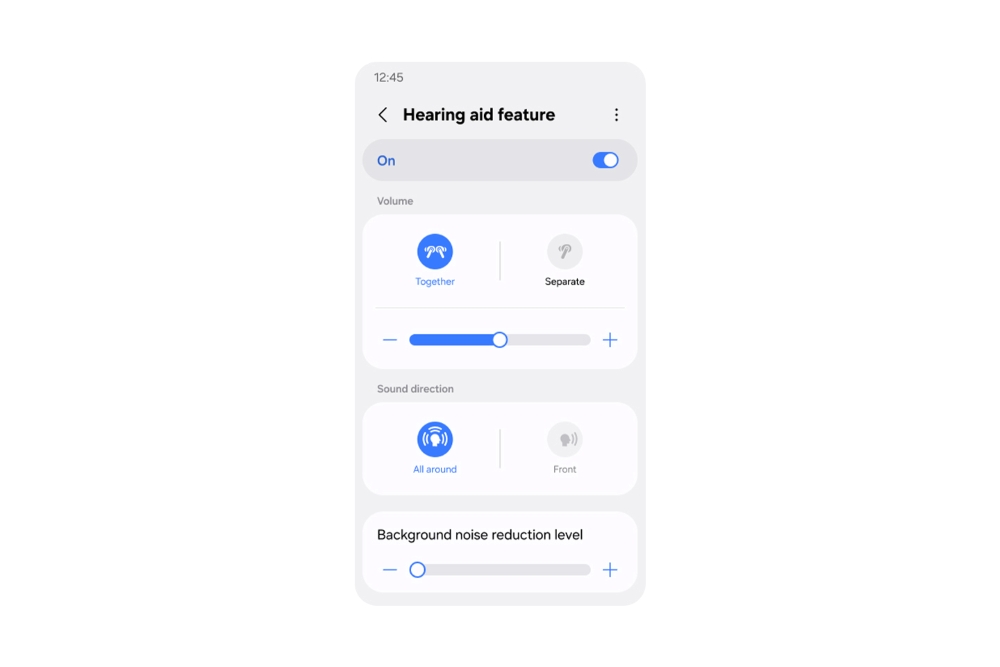
The hearing aid mode then amplifies the sounds a person struggles with — such as high frequencies, whispers or speech from a distance — based on the test results. The amplification is based on the NAL-NL2 formula, which is also used in clinical hearing-aid prescriptions, accompanied by noise reduction and directional sound (beamforming) that helps focus on the speaker.
OTC (over-the-counter) hearing aids are devices that adults with mild-to-moderate hearing loss can obtain directly and fit themselves (self-fitting), without a specialist examination or prescription. This category was formally defined in the U.S. by an FDA regulation that took effect in 2022, aiming to make hearing support more accessible. Galaxy Buds’ new feature is considered a “self-fitting OTC hearing aid” within this category.
Samsung’s move is part of a trend of consumer earbuds turning into hearing aids. In 2024, Apple received FDA clearance for a similar OTC hearing-aid feature on the AirPods Pro 2, and continued in the same direction with later AirPods Pro generations. Samsung’s step with the Galaxy Buds brings the same approach to the Android ecosystem, sharpening the competition in this space.
Samsung says the feature’s development drew on studies conducted at Vanderbilt University Medical Center, San Jose State University and the University of Memphis, as well as collaborations with the National Acoustic Laboratories (NAL) and Samsung Medical Center. The company also emphasizes that the feature is not a substitute for a professional diagnosis or treatment.
For a product that can be worn all day like a hearing aid, a comfortable and stable fit is also an important part of the experience. Samsung describes a data-driven approach in its earbud design, carried out at its design center in San Francisco: using three- and four-dimensional ear scans collected from around the world along with thousands of physical simulations, it says it refined the housing size and fit angles to improve comfort and stability.
For now, the feature is limited to the U.S. and select markets where the necessary clearances have been obtained; it is not yet available in Turkey. In Turkey, hearing aids are treated as medical devices and the acquisition process differs from the U.S. “over-the-counter (OTC)” category. Whether such features will be offered here, and under what conditions they could be used, will therefore depend on the relevant regulations and the manufacturer’s market plans.
The integration of earbuds with hearing support is notable for making access to hearing health easier and raising the profile of the topic. Still, as the manufacturers themselves note, these features are not a substitute for a comprehensive hearing evaluation and professional follow-up.
 İşitmeAtölyesi